The Basel Social Club has quietly become the absolute highlight of Basel Art Week. While the main Art Basel fair handles art primarily as a high-priced investment, the Basel Social Club breaks down the rigid rules of the art market. It merges international contemporary art, performances, live DJ sets, and gastronomy in unconventional, temporarily repurposed spaces—all completely free and open to the public. Following previous editions that took over a historic villa, a mayonnaise factory, a farmland estate, and a former private bank, the latest edition focused on a very unique microcosm: the corporate office.
For this iteration, the collective of artists and gallerists transformed a vacant, multi-story office building at Erdbeergraben, just a short walk from the Basel SBB train station. In spaces that formerly housed training rooms for corporate giants like UBS and Roche, a vertical labyrinth of over 100 rooms unfolded. Architecturally and curatorially, the participating artists engaged deeply with the absurdities of the modern working world. In an era shaped by hyper-digitalization, remote work, and artificial intelligence, the classic office is no longer just a site of production. Instead, it has become a site of intense critical reflection.
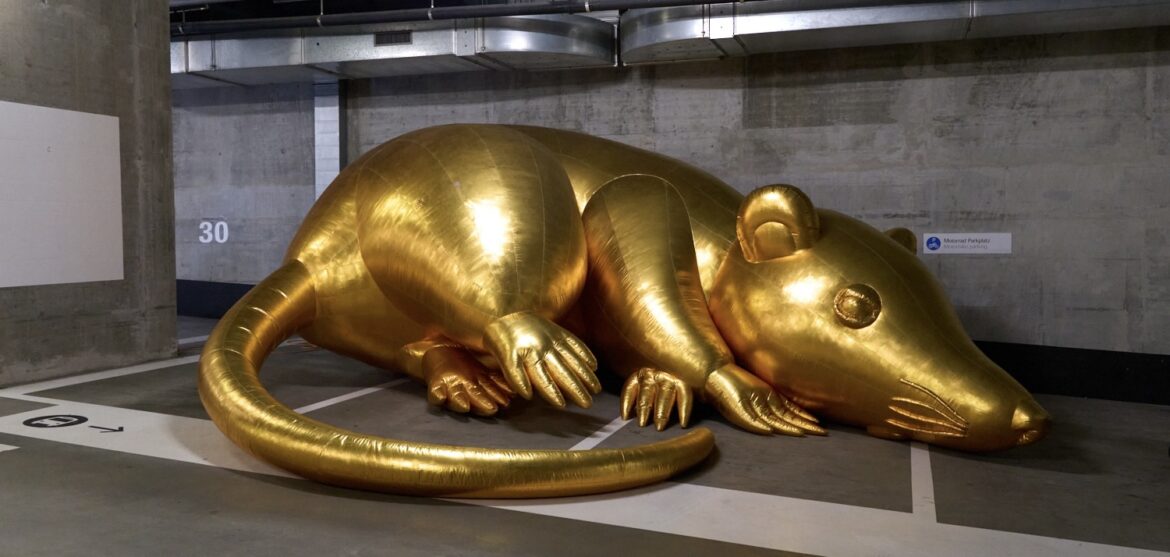
The rooms featured playful, often sarcastic critiques of standard office tropes, ranging from discarded ties and water coolers to microwave lunchboxes. The exhibition specifically targeted the friction points of today’s gig economy and the psychological toll of constant availability. Installations like Silvio Lorusso’s prominent, glowing question, “Shouldn’t you be working?”, perfectly mirrored the permanent guilt felt by modern knowledge workers who rarely find themselves truly out of office. To blur these lines between labor and leisure entirely, the public program offered a bizarrely brilliant mix: late-night DJ sets and bars operated alongside on-site fitness classes, ice baths, and cosmetic treatments.
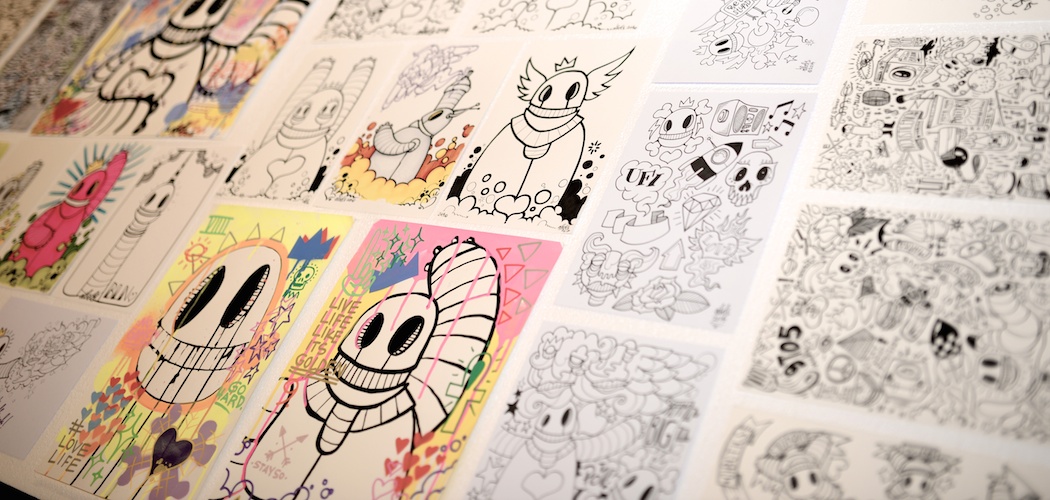
The massive success of the Basel Social Club, which now attracts tens of thousands of visitors, stems from its deliberate antithesis to the traditional art fair model. There are no sterile white booths, no exclusive VIP admission barriers, and no high-pressure sales environments. Works from established blue-chip galleries hang directly alongside pieces by local, emerging talents, democratizing a notoriously elitist industry.
The club revives the hedonistic and experimental energy of the 1990s—an era that originally birthed alternative movements as a counterweight to commercial giants. By turning social interaction, communal dining, and nightlife into core pillars of the exhibition, the Basel Social Club demonstrates how approachable and community-driven contemporary art can be. By transforming a corporate office complex, it has once again proven it is far more than just a satellite fair or a party venue. It serves as a vital, living laboratory for the art community, capturing the absolute essence of our current societal anxieties surrounding work, time, and human exhaustion.
Text: Ioannis Martinis. Photography: André Volk.