A century-old munitions plant in Montreal has been reborn as FOIL – a space that refuses to separate art, coffee, community, and desire.
There is a short, dead-end stretch of Waverly Street in Montreal that the railway used to interrupt. The Canadian Pacific line cut diagonally across it, severing the block and leaving behind a scar of urban wasteland for decades. Today, that scar has been transformed into Parc des Gorilles – a green space born of a local grassroots movement – and beside it, occupying two suites of a century-old industrial building, stands FOIL Gallery. Together, they form one of the most quietly compelling urban transformations the city has seen in years.
FOIL – which stands for Finer Objects in Life – is the creation of two artists: Frédéric Duquette, known digitally as Fvckrender, and Jo-Anie Charland, who works under the name Baeige. What they have built here, in collaboration with Montreal architecture practice Atelier L’Abri, is not straightforwardly a gallery. Nor is it a café, a studio, or a cultural centre. It is, more accurately, all of these at once – and something beyond each.
The building’s essential material framework is revealed – not restored, not replicated, but simply uncovered
The structure itself demands attention before a single artwork is encountered. Built in the 1910s, the building served as an ammunition factory for Canadian Explosives Limited during the First World War. During the Second, women workers moved through its spaces as part of the war effort – a human history now layered beneath the concrete and timber. Neglected for years and twice threatened by demolition, it survived largely by accident, until a wave of new businesses along Waverly Street gave it a reason to endure.
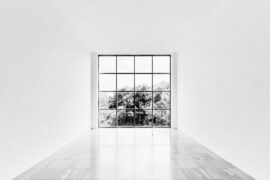
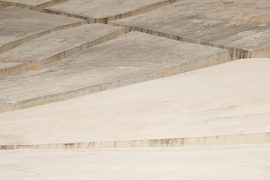
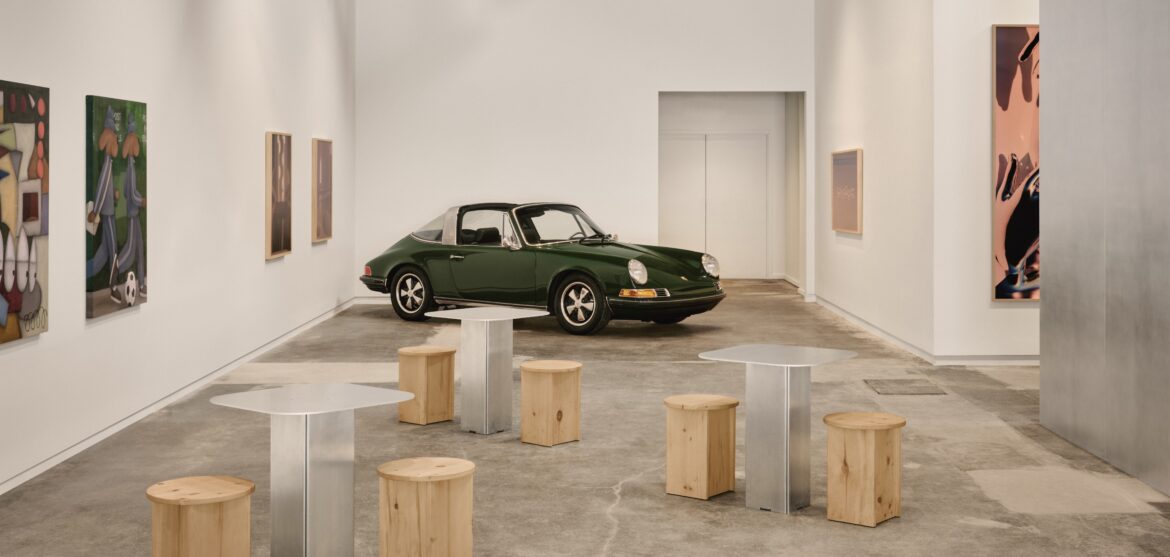
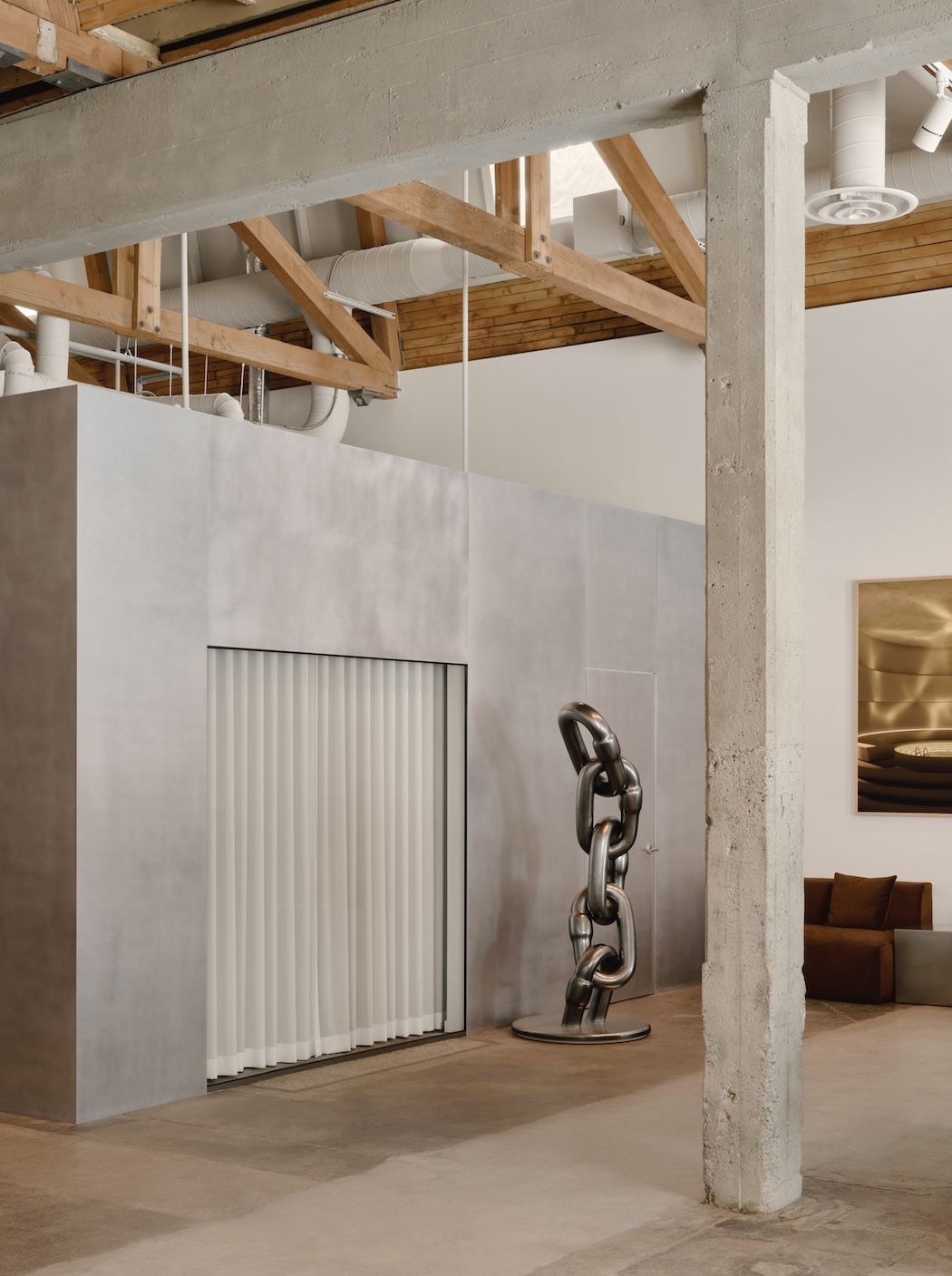
Atelier L’Abri’s approach to the space is one of revelation rather than renovation. Layers of paint were sandblasted away to expose massive timber trusses, wood plank ceilings, and raw concrete beams. The floor – sealed but left intact – carries the accumulated marks of over a hundred years of industrial use. New skylights puncture the spectacular sawtooth roof, flooding the interior with the kind of natural light that makes even the most minimal space feel theatrical. Nothing has been prettified. Everything has been clarified.
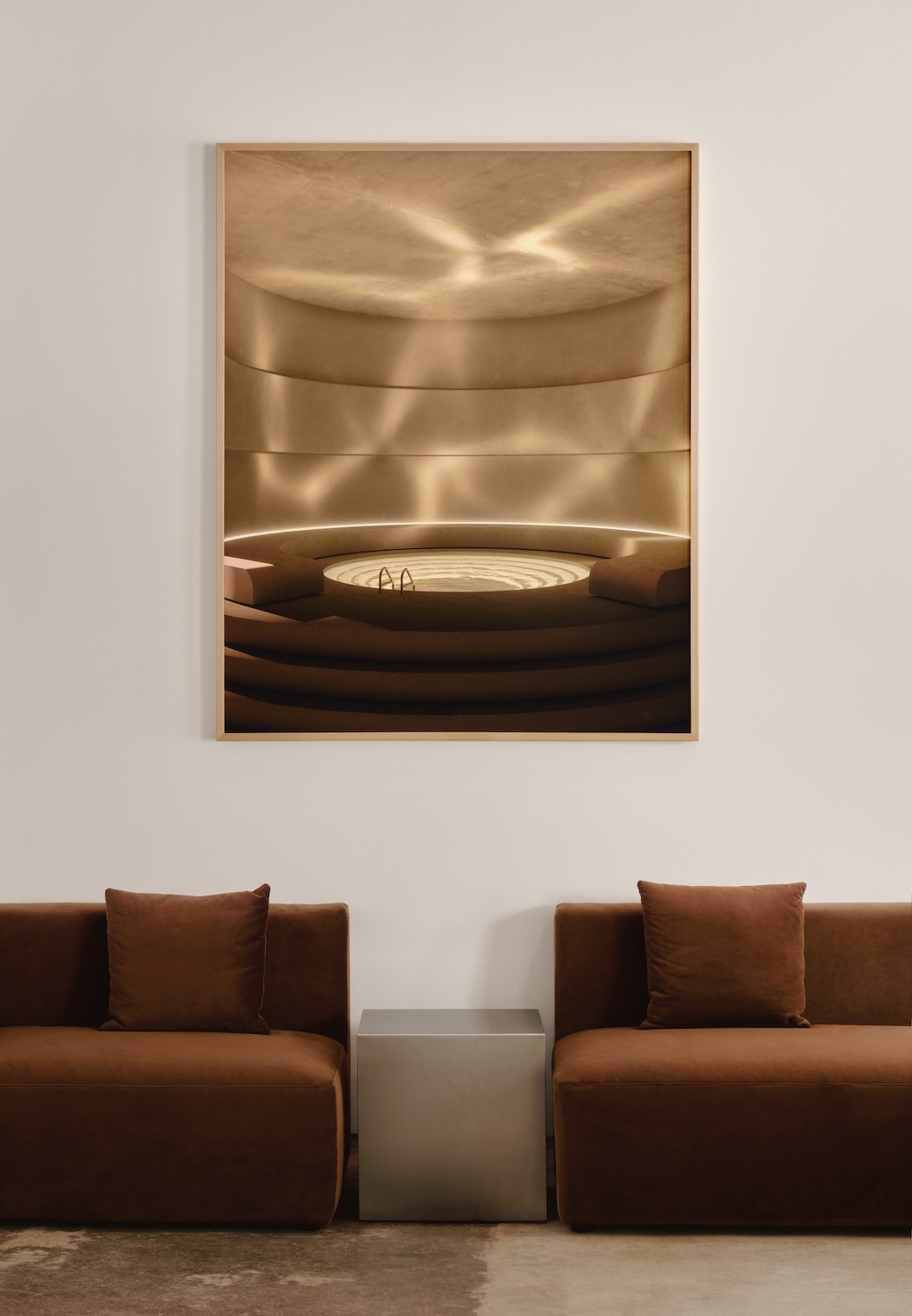
Into this stripped-back shell, the architects inserted a single intervention: an abstract metal cube, brushed by hand and positioned at the heart of the floor plan. It holds the gallery’s private functions – meeting room, workspace – without interrupting the spatial clarity of the whole. Against the preserved raw textures of floor and ceiling, the white-painted peripheral walls read as crisp exhibition surfaces. The contrast is neither aggressive nor apologetic. It is simply right.
What sets FOIL apart from many gallery spaces is a conviction that art is not only seen, but experienced in full – with the body, not just the eye. The soundscape permeating the space was composed by Olivier Lamontagne of The Holy. The fragrance is a custom creation by New York perfumery D.S. & Durga. The coffee is locally roasted by ZAB Café; the pastries come from Mélilot. These are not incidental additions. They are structural to the proposition.
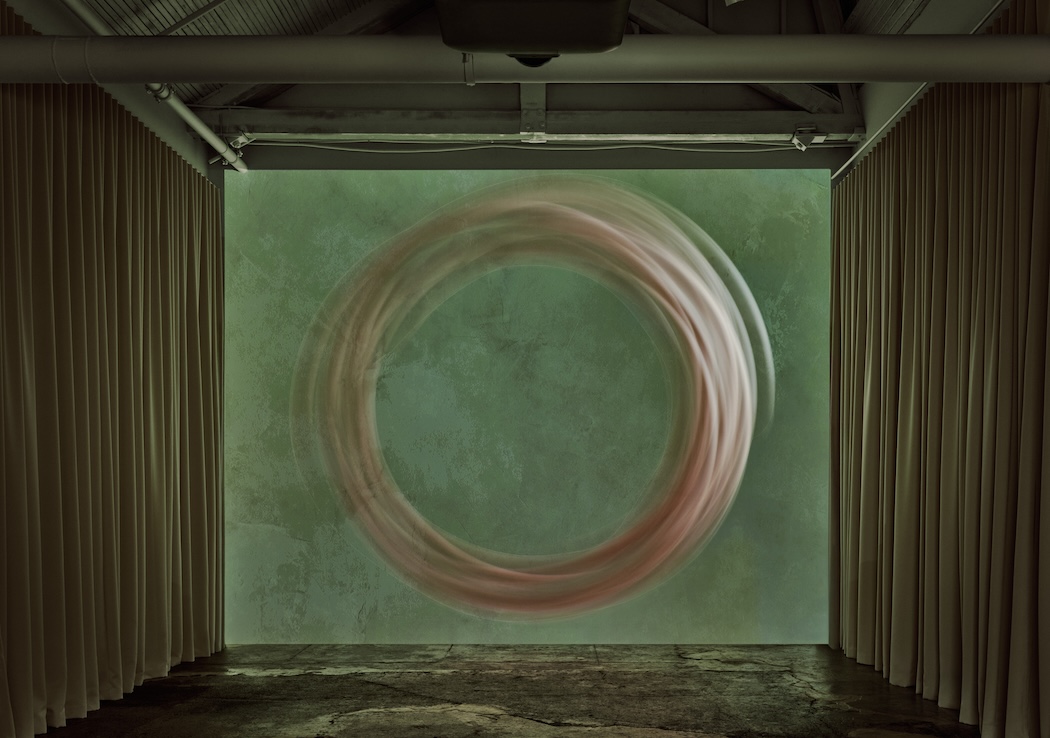
At the front of the space, a luminous café opens onto the park through a large glass garage door. The curved counter – finished in artisanal microcement – carries the same material intelligence as the architecture around it. Custom furniture by Montreal designer Raymond Raymond adds warmth without sentiment. At the rear, a closed projection room provides an intimate chamber for audiovisual works and immersive screenings.
And then, positioned at the centre of it all: a restored 1970 Porsche Targa. It sits not as décor, but as a sculptural statement – a machine made beautiful by time and care, blurring the line between art, design, and the objects we choose to keep close.
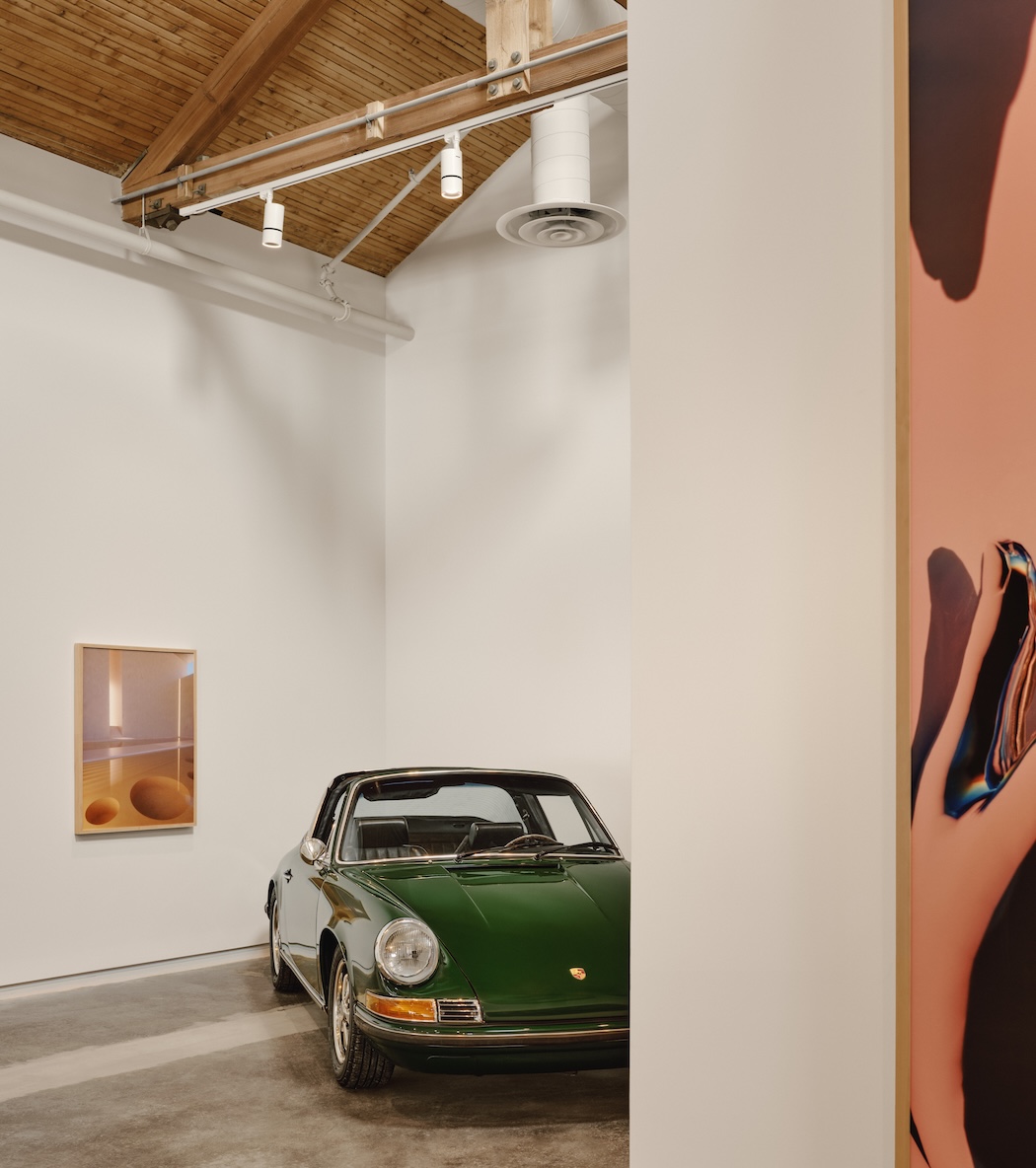
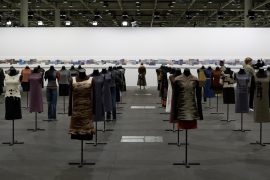
The inaugural exhibition brought together works by Fvckrender and Baeige themselves alongside a constellation of contemporary creators – J3000, Vincent Tsang, Andrea Wilkin, Victor Mosquera, and Zoë Winters – spanning digital and physical practices. The programming extends beyond exhibition: FOIL hosts launches, screenings, and AM:PLIFIED, its monthly morning series of DJ sets and croissants that has already acquired the devoted following of those who prefer their art with caffeine.
What the founders have achieved – together with Atelier L’Abri – is a space that makes the argument, quietly and convincingly, that cultural institutions do not need to be solemn. They need to be alive. FOIL understands that the best things – art, architecture, coffee, community – are not diminished by proximity to one another. They are amplified by it.
On a short dead-end street in Mile-Ex, beside a park that almost wasn’t, in a factory that nearly disappeared, Montreal has found one of its most interesting new rooms.